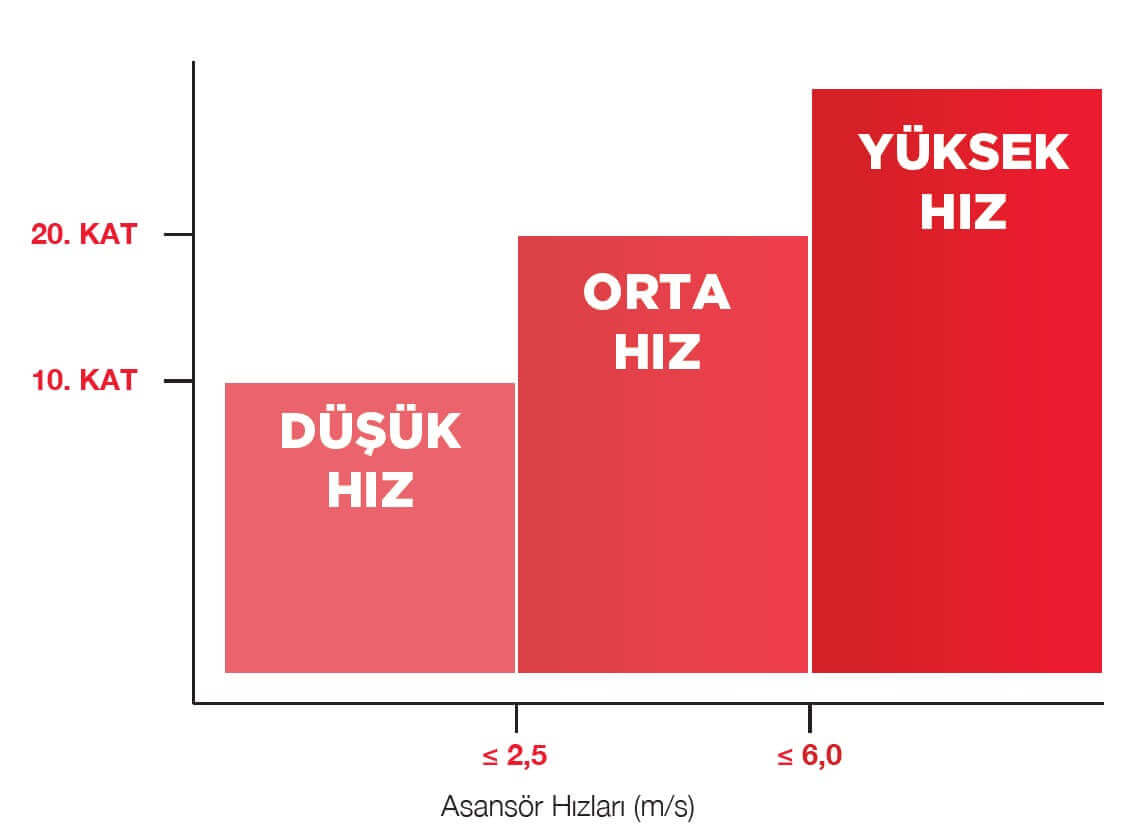
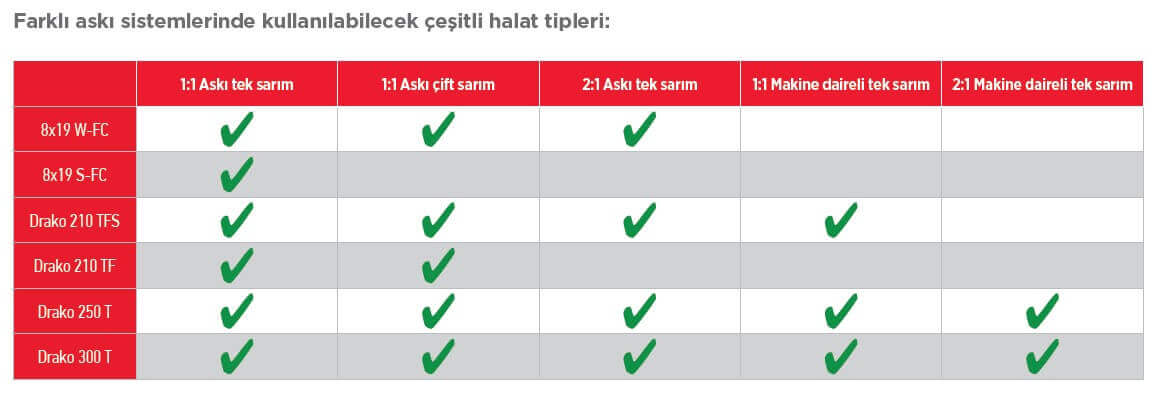
Various ropes are used in different lift designs with regard to rope selection for lifts. The selection of the correct rope construction can be achieved through optimisation between the following factors:
• High resistance to rope fatigue
• High wear resistance
• Low elongation
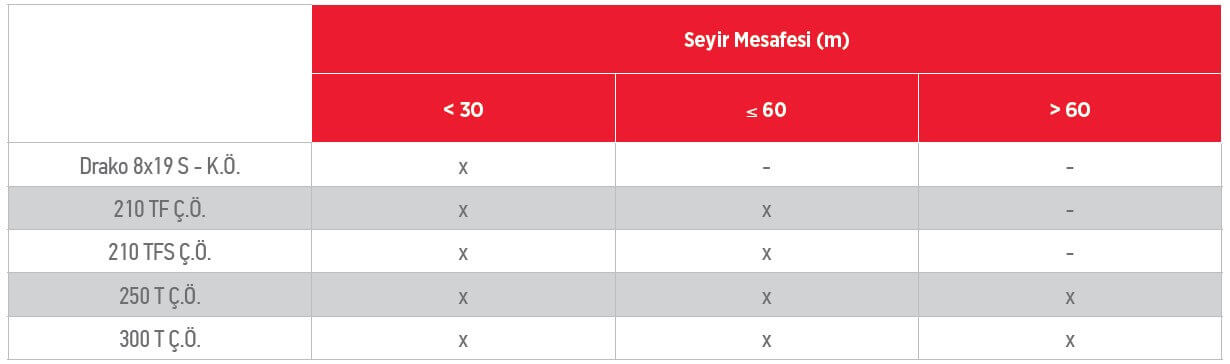
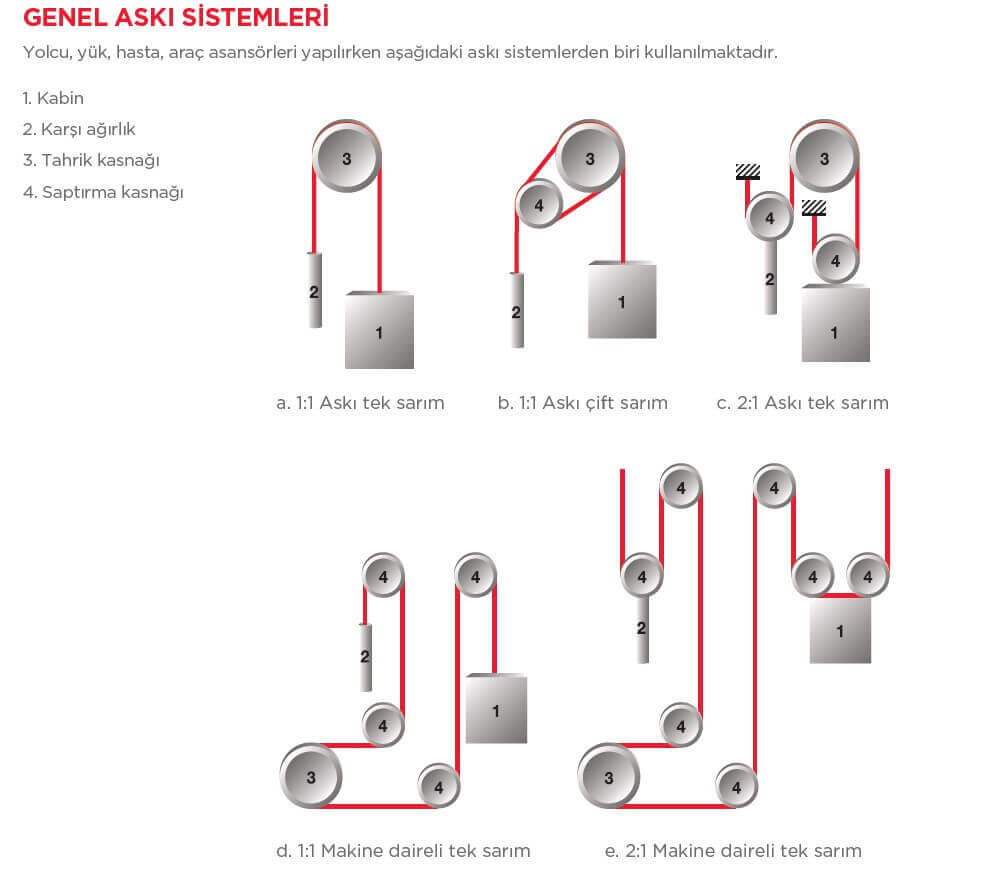
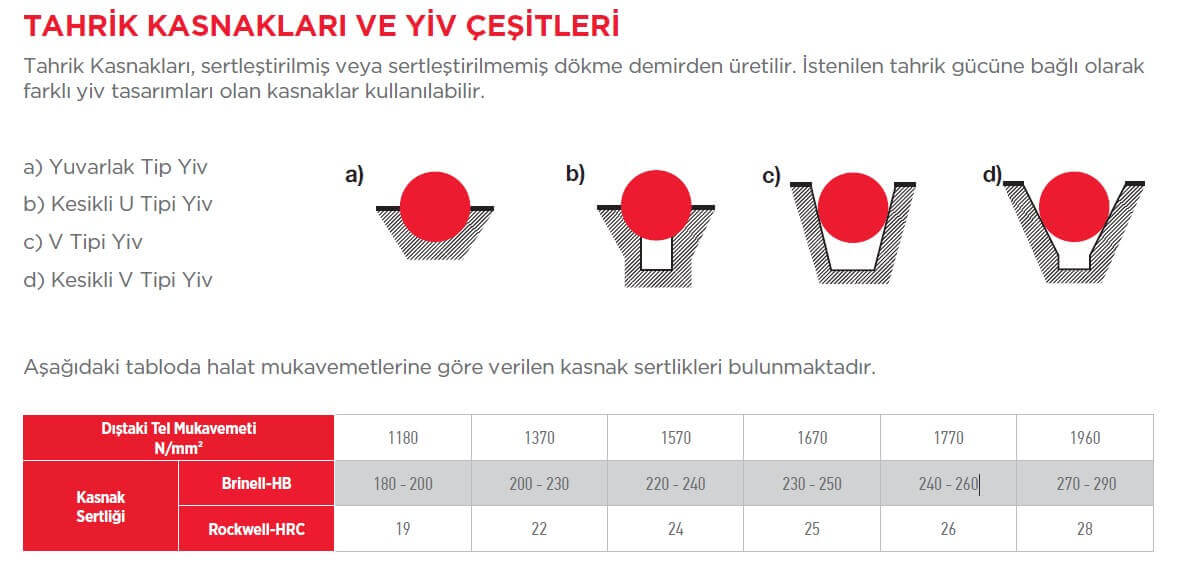
Note: The recommendations stated here apply to a pulley with a V-belt and a 1:1 suspension, and to a machine motor with a D/d ratio of 40.
Rope elongation is one of the most misunderstood terms and causes of confusion. This is because there is no elasticity modulus that can predict the elongation of the rope throughout its service life. The concept of ‘elasticity modulus’ is normally only used in connection with the elongation behaviour of working materials. For this reason, the rope elongation modulus is used for steel rope components.
This term arises in the following situations:
• When the rope needs to be shortened in relation to initial elongation,
• When balancing is performed with the cabin loaded and unloaded to ensure the floor level,
• In the springing of the cabin or counterweight,
• In the acceleration or deceleration of the lift.
Under load, ropes are subject to elongation. Fibre-core ropes elongate more than steel-core ropes. The more compact and robust the rope, the less it will elongate.
Two types of elongation are observed.
a) Structural elongation
This is caused by the settling of the core and the wires within the rope when a load is applied. Most structural elongation occurs shortly after the new rope is put into service.
b) Elastic elongation
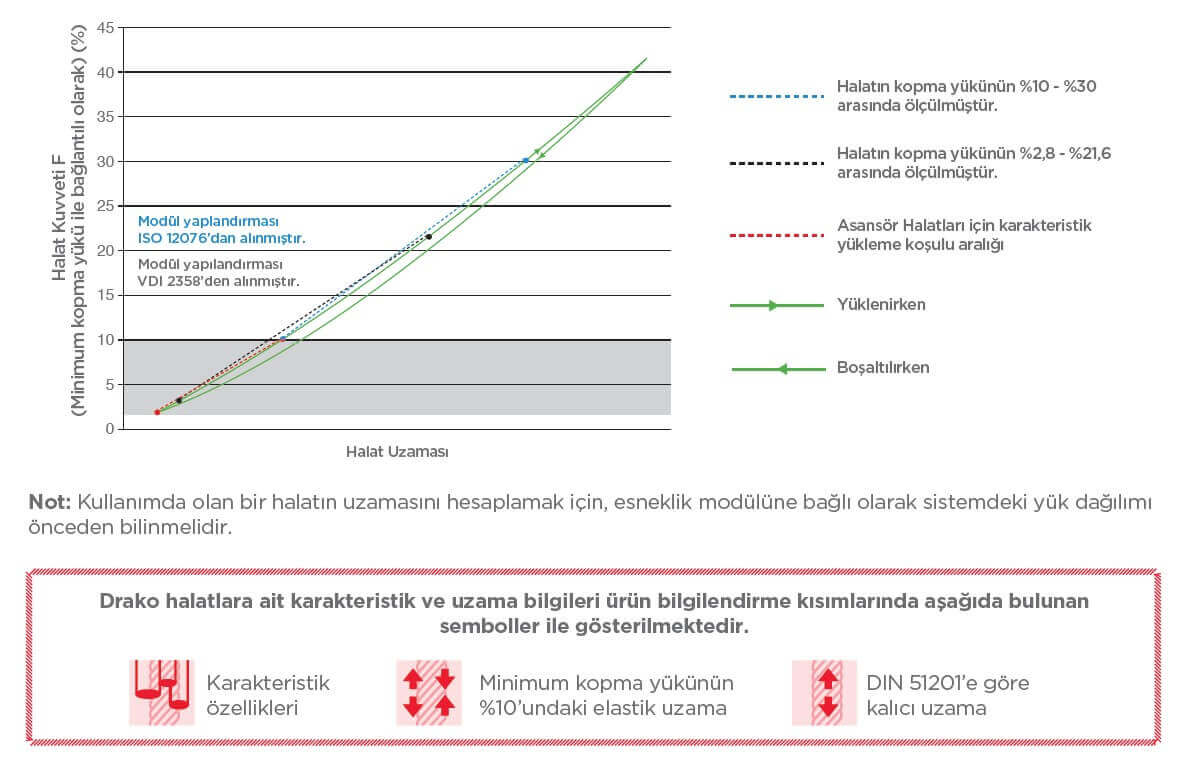
This is caused by the application of additional forces such as loading and unloading and/or the acceleration and deceleration of the cabin. The modulus of elasticity, or e-modulus, is an important factor in determining the elongation of a rope. Due to the rope’s helical shape, the modulus of elasticity is not linear when compared to a straight rod. It will vary depending on the applied load. The greater the load, the higher the elastic modulus. There are different approaches to determining the elastic modulus. Depending on the method chosen, the elastic modulus will vary significantly and, consequently, the results for the calculated elongation will vary. The higher the elastic modulus, the lower the calculated elongation. The graph below shows that the typical load range in lift design varies between approximately 2% and 10% of the rope’s minimum breaking force, due to the high safety factors in passenger transport. An elasticity modulus established within this load range is generally lower compared to increasing load ranges, but the expected elongation for each load increase will be higher.